Some shelves look effortlessly collected, while others feel busy even when they hold beautiful objects. The difference is rarely about buying more decor. More often, it comes down to how pieces are grouped, spaced, and allowed to relate to one another. One of the simplest ways to create that sense of order is the rule of three in interior styling.
What Is the Rule of Three in Interior Styling?
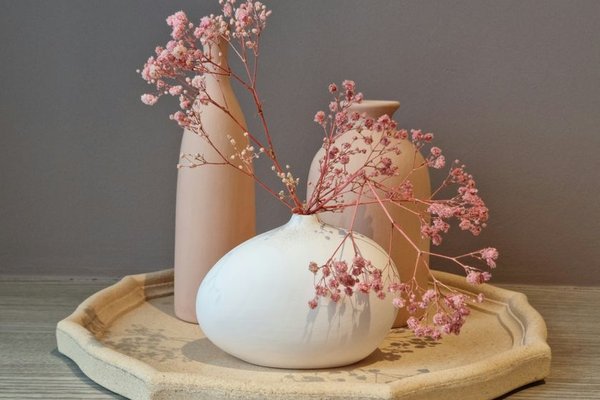
The rule of three is a decorating guideline that involves grouping three objects so they read as one balanced composition. The pieces do not need to match or share the same size. The most appealing groupings usually combine different heights, shapes, textures, or functions.
Imagine a stack of books, a small ceramic bowl, and a framed photograph. The books add horizontal structure, the frame introduces height, and the bowl softens the display with a rounded shape. Together, they create a complete visual story. This is the essence of rule of three decorating: variety connected by a clear relationship.
Why Groups of Three Feel Balanced
Pairs can look polished, but they often feel formal and predictable. A group of three creates gentle asymmetry. Your eye moves from one object to the next rather than stopping in the middle, making the arrangement feel more dynamic.
Three also creates a natural hierarchy. One item can act as the focal point while the other two support it, preventing every piece from competing for attention. This is especially useful for personal collections, where photographs, travel finds, inherited pieces, and favourite books may have very different forms.
How to Style a Shelf Using the Rule of Three
Start With Three Different Heights
Height variation is one of the easiest shelf styling tips to use. Choose one tall item, one medium-height item, and one low item. A vase, a framed print, and a small decorative box might work together. The stepped silhouette keeps the eye moving and avoids the flat look created by lining up objects of equal height.
If two pieces are similar in size, use books as risers. Placing a bowl or candle on a short stack changes its level and adds another layer to the display.
Mix Shapes and Textures
A successful group of three usually includes contrast. Pair something angular with something curved, or place smooth glass beside a textured basket or rough ceramic vessel. These small differences make styling vignettes feel richer, even when the colour palette is restrained.
Create a Visual Triangle
Imagine a triangle connecting the highest points of your three objects. The tallest piece forms the top, while the two lower pieces create the base. This invisible shape helps the group feel stable and complete.
The triangle does not need to be symmetrical. A slightly off-centre arrangement often looks more relaxed. Leave breathing room between the pieces, but keep them close enough to read as one group rather than unrelated objects.
Use the Principle Without Making Every Shelf Identical
The rule of three in interior styling is a guide, not a requirement to place exactly three objects everywhere. Repeating identical trios on every shelf can quickly feel formulaic, so vary the scale and interpretation.
On one shelf, three individual objects might form the arrangement. On another, a stack of books can count as one visual unit beside a vase and a framed picture. Several small items may also read as one unit when collected in a tray or bowl.
Alternate fuller and quieter areas too. One shelf might feature a layered vignette, while the next holds a single sculptural object. This gives the display rhythm and prevents it from becoming cluttered.
Common Mistakes to Avoid
Choosing Objects That Are Too Similar
Three matching objects in a straight line may look neat, but they miss the movement that makes the principle effective. Unless you want a formal display, vary at least one element such as height, shape, colour, or texture.
Ignoring Negative Space
Empty space is part of the composition. Packing every gap with decor makes it difficult for individual groups to stand out. Leave visible space around each vignette so the eye can pause before moving to the next arrangement.
Using Pieces With No Connection
Contrast is helpful, but the objects still need a reason to belong together. That connection might be a shared colour, material, theme, or personal story. A brass candlestick, a book with gold lettering, and a warm-toned photograph can feel cohesive even though they serve different purposes.
Where Else the Rule of Three Works
This principle extends beyond shelves. On a coffee table, group a book, a small tray, and a vase. On a bedside table, a lamp, a framed photograph, and a dish create a practical but polished arrangement. A console might combine a tall lamp, medium-sized artwork, and a low bowl.
How to Make the Look Feel Personal
The best interiors do not appear as though every object was bought at the same time. Use the rule of three to organise pieces you already value rather than treating it as a shopping list. Combine an inherited item with something handmade and something useful. Mix older objects with newer ones, and allow a slightly imperfect piece to bring character.
Step back regularly and view the whole shelf rather than focusing on one group. If one area looks heavy, remove an item, lower the height, or introduce a lighter material such as glass.
Frequently Asked Questions
Does the rule of three always require exactly three objects?
No. Three is a useful starting point, but a stack, collection, or tray can count as one visual unit. The goal is a balanced composition that feels easy for the eye to understand.
Can I use the rule of three in a minimalist room?
Yes. Choose three simple pieces with clean lines and plenty of surrounding space. A limited palette and subtle differences in height or texture will keep the arrangement calm.
What colours work best for rule of three decorating?
There is no required palette. Cohesion can come from repeating one colour, using related neutrals, or combining contrasting shades in controlled proportions. The objects should feel connected without matching perfectly.
How do I know when a shelf has too much decor?
If individual objects are difficult to notice, the shelf probably needs more negative space. Remove a few pieces, separate the remaining items into clear groups, and give each vignette room around it.
A Simple Principle With Lasting Impact
The rule of three in interior styling works because it offers structure without demanding perfection. It turns separate objects into thoughtful arrangements, gives personal collections a sense of order, and makes everyday surfaces feel considered.
Start with one shelf or table, choose three pieces with different heights, and adjust the spacing until they feel connected. The result is not a perfectly styled showroom, but a space that feels balanced, expressive, and genuinely yours.