A dishwasher can leave plates looking clean while collecting grease, food scraps, and minerals in places the wash cycle does not fully reach. Residue gathers around the filter, inside spray-arm holes, and along door edges. If the machine smells stale or clean glasses have gritty specks, the problem may be trapped debris rather than weak detergent.
Knowing how to clean a dishwasher involves more than running an empty hot cycle. Start by removing physical buildup, then clean the interior with a product suitable for your model. The following routine tackles odors and poor washing results together.
Gather Supplies and Check Your Manual
Empty the dishwasher and let it cool. Gather a soft cloth, sponge, mild dish soap, warm water, and a soft-bristled brush. A wooden toothpick may help with a blocked spray hole. For scale, choose a dishwasher cleaner approved by the manufacturer.
Check the owner’s manual before removing parts. Some machines have removable filters; others have different filtration systems. Avoid abrasive scrubbers and harsh cleaning chemicals unless the instructions specifically allow them.
Step 1: Clean the Dishwasher Filter
A dirty filter often explains unpleasant smells and food particles on dishes. Most removable filters sit beneath the lower rack near the bottom spray arm. Some twist free, while others use a different release mechanism.
Remove and Rinse the Filter
Follow the manual to remove the filter. Inspect the surrounding area for food, labels, or debris. Watch for sharp fragments and never reach blindly into the opening. Rinse the filter under running water, using a little mild dish soap and a soft brush to lift grease from the mesh.
Rinse thoroughly, reinstall every part, and confirm that any locking mechanism is secure. Never operate the dishwasher with a required filter missing or loose.
For example, if oatmeal bowls come out with grainy flecks despite correct loading, clean the dishwasher filter before switching detergent. Food caught in the filter can return to the wash water and settle on dishes.
Step 2: Clear the Spray Arms
Spray arms distribute water throughout the racks. Clogged openings may leave dishes on one side clean while those on the other retain food. Turn each accessible arm gently to check that tall plates, utensils, and pan handles do not obstruct it.
Look for seeds, particles, or scale inside the small holes. If your manual permits removal, detach the arm and rinse it. Gently loosen visible debris with a wooden toothpick, without enlarging the openings or pushing material deeper inside. Refit the arm and check that it spins freely.
If it remains stuck or the spray seems weak, follow the model’s troubleshooting instructions rather than dismantling the pump.
Step 3: Wipe the Door Seals and Edges
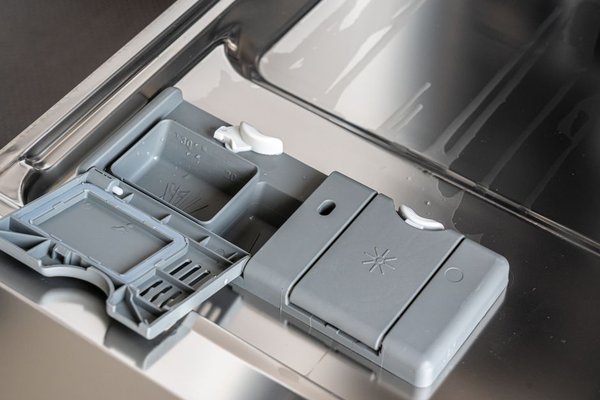
Wash water may not reach the entire door perimeter. Residue can collect along the rubber gasket, lower door lip, detergent dispenser, and narrow seams. These hidden areas sometimes explain an odor that survives a normal wash.
Wipe them with a soft cloth dampened with warm, mildly soapy water. Use a soft brush for corners, taking care not to pull or scrape the gasket. Wipe again with a clean damp cloth, then dry accessible ledges.
If the dishwasher smells musty after sitting unused for several days, inspect the bottom lip and filter well first. Small trapped food pieces can smell unpleasant even when the tub walls look spotless.
Step 4: Clean the Interior and Tackle Scale
Wipe visible film from the walls, floor, and bottom front area of the tub. For deeper dishwasher cleaning, use a machine-specific cleaner compatible with your model, following its label. Select a dedicated maintenance cycle if the manufacturer recommends one.
Vinegar is commonly suggested for dishwasher odor removal, but it is not suitable for every machine. Some manufacturers permit occasional use; frequent exposure to acid may damage certain components. Do not pour vinegar onto seals or use it routinely without checking the manual. Never mix vinegar with chlorine bleach or other cleaning chemicals.
Chalky white deposits often indicate hard water rather than food residue. A suitable descaler may help. If scale returns quickly, check rinse-aid use and any water-hardness or softener settings supported by your appliance.
Create an Easy Dishwasher Cleaning Routine
A practical schedule follows how heavily the machine is used rather than demanding a full deep clean every week.
After washing, remove visible scraps from accessible areas and check that nothing blocks the spray arms. Wipe spills from the door edge. If dirty dishes must sit for a while, a rinse program may help when the machine offers one.
Every week or two, inspect the removable filter if you run daily loads. Clean it when food accumulates or odors appear. Lighter-use households may need less frequent cleaning, but some manufacturers recommend regular checks after each wash.
About monthly, inspect the seals, dispenser, arms, and interior. Use an approved cleaning cycle when needed or as directed in the manual. This dishwasher cleaning routine is more effective than repeatedly running empty cycles while leaving a blocked filter untouched.
What if Odors or Dirty Dishes Persist?
If water remains pooled beyond the usual small amount in the sump, a drain warning appears, or wastewater backs up, cleaning the visible surfaces may not resolve it. Follow the appliance’s drainage troubleshooting guidance or arrange service.
For poor washing results, check loading clearance, detergent condition, cycle selection, and hot-water supply. Leaks, electrical smells, strong sewage-like odors, or repeated drainage failures deserve prompt investigation rather than more chemicals.
For related upkeep, guidance on cleaning kitchen sink drains can help separate sink odors from dishwasher problems. A kitchen cleaning schedule also makes appliance maintenance easier to remember.
Frequently Asked Questions
How often should I clean a dishwasher?
Inspect the filter regularly and clear it when debris builds up. Monthly checks of the seals, spray arms, and interior suit many households, but follow your model’s instructions.
Can I clean a dishwasher with vinegar?
Only when the manufacturer permits it. Vinegar is acidic and can damage some materials with repeated use. Do not combine it with bleach.
Why does my dishwasher smell after a wash?
Check the filter, lower door edge, and food residue left in the machine. Persistent odors may indicate a drainage issue.
Do spray arms need removing every time?
No. Check that they rotate freely and their openings are clear. Remove them only when necessary and permitted by the manual.
Keep It Fresh by Cleaning the Right Places
Effective dishwasher care starts with removing food and blockages, not masking smells. A clean, securely fitted filter, clear spray arms, wiped seals, and occasional approved interior cleaning work together to keep the machine in better condition and help dishes come out clean.