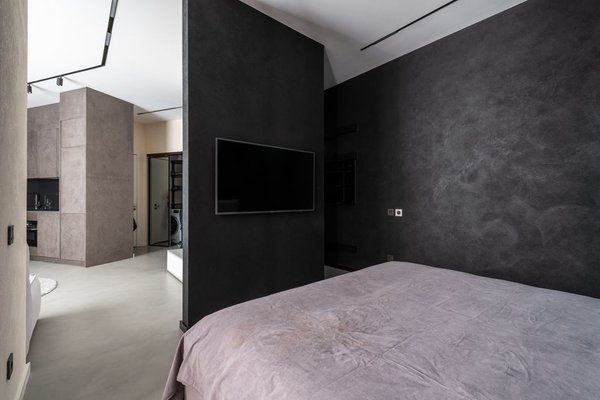
A TV can make a bedroom more useful without making it feel like a second living room. The challenge is that a good bedroom layout with a TV has to work from two positions: when you are watching from bed and when you are simply moving around the room. Screen height, window reflections, outlet locations, and the space at the foot of the bed all matter. Plan those details together, rather than choosing a blank wall and hoping everything fits.
Start With the Bed, Not the Television
Keep the bed in the position that gives the room its best everyday flow. Check access to both sides where possible, wardrobe doors, drawers, and the route from the door to the bathroom. Then sit against your pillows and look toward the likely TV wall. That is your real viewing position; the center of the room is not.
A screen directly opposite the bed usually offers the simplest sightline, but it is not compulsory. If the opposite wall contains a window, closet, or doorway, a nearby side wall may work better. The aim is to avoid twisting your neck or sacrificing sensible bedroom furniture placement for the screen.
Choose a Screen Size for the Actual Viewing Distance
Bedroom viewing distance should be measured from your eyes when you are sitting or reclining in bed to the screen, not from the headboard to the wall. As a useful reference, a 43-inch television gives a conventional viewing angle at roughly six feet, while a 55-inch screen reaches a similar angle at around seven and a half feet. These are starting points, not strict comfort rules.
A larger screen may feel immersive for movies but visually dominate a compact bedroom. Mark the proposed screen’s width and height with painter’s tape before buying. Sit where you normally watch and see whether subtitles are readable, the picture feels overwhelming, or the screen crowds nearby furniture. Your preferred viewing habits matter as much as the measurement.
Get the Height Right From a Reclined Position
Living-room advice to place a television near seated eye level does not transfer perfectly to a bed. Pillows raise your head, and many people watch slightly reclined. Hold a piece of cardboard against the wall at the proposed screen height, settle into your usual position, and notice whether you have to lift your chin.
Mounting a TV high above a tall dresser can create a strained viewing angle. A tilting mount may help with a modest height difference, but it cannot fix a screen that is dramatically too high. Avoid a position where the television blocks artwork, a window opening, or easy access to stored items.
Compare Three Practical TV Placement Options
Opposite the Foot of the Bed
This is often the cleanest arrangement for a rectangular bedroom. A slim wall mount saves floor space and keeps the picture centered on the bed. Confirm that the screen and any furniture below it do not squeeze the walkway. If you prefer a dresser beneath the screen, measure the dresser’s depth as well as its width.
On an Adjacent Wall
TV placement in bedroom layouts with awkward doors or windows sometimes works best on a side wall. A swiveling mount can angle the screen toward the pillows during use and return it closer to the wall afterward. Check the mount’s extension and swing path so it cannot hit a door or become a hazard in a narrow passage.
On a Low Media Unit
A low, stable TV unit can suit renters or rooms where wall mounting is impractical. Choose furniture specifically rated to support the television, and secure the TV and furniture against tipping as directed by their manufacturers. A regular chest of drawers is not automatically an appropriate TV stand.
Control Reflections Before Choosing the Wall
TV glare control is easier when considered during the layout stage. A screen directly facing a bright window can act like a mirror. Stand at the intended screen position at different times of day and look toward the bed. If you see an obvious window reflection, test another wall before paying for installation.
Blackout curtains are not the only answer. Light-filtering shades, adjustable curtains, and lamps positioned beside rather than directly opposite the screen can improve viewing comfort. Think about bedroom lighting layers too: a soft bedside lamp is usually more pleasant than watching in a completely dark room with an intensely bright screen.
Plan Cable Management and Safe Installation
A tidy setup begins with the outlet, not with the cable cover. Identify where the television, streaming device, and any soundbar will get power. Leave access for unplugging equipment, and avoid routing loose leads across the floor or behind drawers that could pinch them.
Paintable surface-mounted cord covers are a practical option when you cannot alter the wall. For concealed wiring, use a properly installed in-wall power solution that meets local electrical requirements. Do not feed an ordinary TV power cord or extension lead through a wall cavity. Keep ventilation openings unobstructed, follow the manufacturer’s mounting instructions, and use suitable fixings for the wall construction.
A Realistic Layout Example
Consider a 12-by-11-foot bedroom with a queen bed against the 11-foot wall. The bed is roughly 80 inches long, leaving about 64 inches between its headboard wall and the opposite wall before accounting for the headboard and any furniture. An 18-inch-deep dresser at the foot-end wall would reduce that floor gap, while a wall-mounted TV would preserve more of it.
If the viewer’s eyes are approximately seven feet from the screen, a 50-inch television is a reasonable size to try. Tape its outline on the wall and test the sightline from the pillows. If an opposite window creates reflections, use the side wall and an adjustable mount instead. For even tighter rooms, small bedroom layout ideas that prioritize open walkways are worth considering.
Frequently Asked Questions
Where should a TV go in a small bedroom?
Usually on a wall visible from the bed that does not interfere with doors, wardrobes, or the main walkway. A slim wall mount often preserves more space than a deep stand, provided the wall and installation are suitable.
Should a bedroom TV be centered with the bed?
Centering is convenient because it minimizes sideways head turning, but a slightly off-center screen can work with a swiveling mount. Comfortable sightlines matter more than perfect visual symmetry.
How high should a bedroom television be mounted?
There is no universal height. Test the screen center while sitting against your usual pillows and choose a position that avoids sustained neck strain. A screen mounted above tall storage may need reconsideration.
Is a TV on a dresser safe?
Only when the furniture is designed to support the TV and both are secured appropriately. Wall mounting or anchoring is especially important where children may climb or pull on furniture.
Make the Television Fit the Bedroom
The best setup is the one you barely notice when the screen is off. Keep the bed and circulation routes comfortable, check size and height from your actual viewing position, and solve glare and wiring before mounting anything. A considered layout gives you enjoyable viewing without surrendering the calm, practical character of the bedroom.