Kitchen counters have a way of collecting life. A coffee mug left from the morning, unopened mail, a fruit bowl that is somehow also holding keys, a blender that has not been used in weeks, and a few random items that do not belong in the kitchen at all. At first, it seems harmless. Then one day, you look around and realize there is barely enough space to chop an onion.
Decluttering kitchen counters is not about creating a picture-perfect kitchen that looks untouched. A kitchen is a working room. It should show signs of cooking, eating, packing lunches, making tea, and moving through daily life. But when every surface is crowded, the room starts working against you. Simple tasks take longer. Cleaning becomes annoying. Cooking feels heavier than it should.
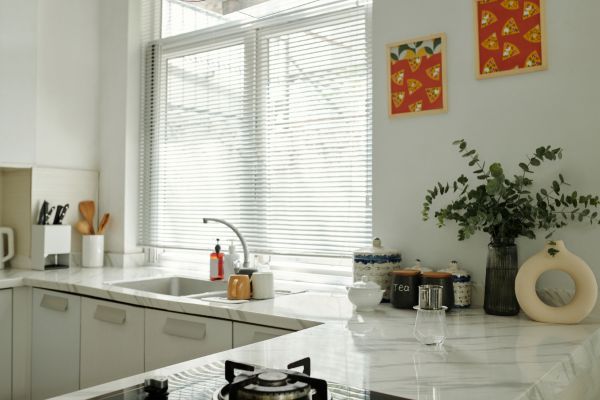
The goal is not emptiness. The goal is ease. A clear counter gives you space to prepare food, wipe surfaces quickly, and breathe a little when you walk into the room. Even a small kitchen can feel calmer when the counters are treated as useful work surfaces rather than storage shelves.
Why Kitchen Counters Become Cluttered So Quickly
Kitchen counters attract clutter because they are convenient. They are flat, visible, and usually located in the busiest part of the home. When you walk in with groceries, bags, mail, or your phone, the counter is the easiest place to put things down. The problem is that “just for now” often turns into three days.
Another reason counters become crowded is that many kitchen items do not have clear homes. Appliances stay out because cupboards are full. Spices sit near the stove because the drawer is messy. Papers pile up because no one knows where they should go. Once one area becomes a drop zone, clutter tends to invite more clutter.
There is also the issue of good intentions. A juicer left out because you want to drink more fresh juice. A stack of cookbooks because you plan to try new recipes. A bowl of vitamins because you do not want to forget them. These things may represent positive habits, but if they crowd your workspace, they can create more stress than motivation.
Start by Removing Everything That Does Not Belong
The simplest first step is to clear away anything that obviously does not belong on the kitchen counter. Do not overthink it. Look for mail, school papers, toys, tools, chargers, receipts, bags, clothing, beauty products, and anything else that wandered into the kitchen from another room.
This stage is not about deep organizing. It is about returning items to their proper zones. If something belongs in the office, take it there. If it belongs by the front door, move it. If it is trash, throw it away. If it is recycling, place it where recycling goes.
Once the non-kitchen items are gone, the counter will already feel different. This quick reset often reveals the real problem: too many kitchen-related items living on the surface. That is when the more thoughtful decisions begin.
It helps to do this when you have a little uninterrupted time, even if it is only twenty minutes. Kitchen clutter can feel bigger than it is when you stare at it all day, but once you start moving things, progress comes quickly.
Decide What Truly Deserves Counter Space
Not every kitchen item needs to be put away. Some things earn their place on the counter because they are used daily or make the kitchen function better. A coffee maker used every morning, a knife block, a fruit bowl, or a small tray for cooking oils may be practical. The key is being honest about what you actually use.
Ask yourself how often each item is needed. Daily items may stay. Weekly items might deserve an easy-to-reach cupboard. Monthly items probably do not need prime counter space. This is especially important for small appliances. Toasters, air fryers, mixers, blenders, rice cookers, and food processors can quickly take over a kitchen if they all remain out.
There is no universal rule. A blender used every morning for breakfast makes sense on the counter. A blender used twice a year does not. Your kitchen should match your real routines, not someone else’s idea of what a kitchen should look like.
When in doubt, test it. Put an appliance or item away for two weeks. If you keep reaching for it, maybe it belongs out. If you forget about it, the counter did not need it.
Give Every Regular Item a Clear Home
Decluttering kitchen counters becomes easier when every item has a reliable place to return to. Without a home, things drift back to the surface. This is why clearing counters without fixing storage rarely lasts.
Look inside your cabinets and drawers. Often, the reason counters are cluttered is not lack of space, but poorly used space. A cabinet may be full of mismatched containers, old mugs, duplicate utensils, or serving dishes that are rarely used. A drawer may be crowded with gadgets you forgot you owned.
Before buying organizers or storage bins, remove what you no longer need. Expired food, cracked containers, duplicate tools, and unused mugs take up valuable room. Once the hidden storage is lighter, counter items can move into places that actually make sense.
Try to store items close to where they are used. Keep cutting boards near the prep area, mugs near the kettle or coffee station, spices near the stove, and food storage near the fridge or leftovers zone. When storage follows behavior, the kitchen becomes easier to maintain.
Create Small Zones Instead of Scattered Clutter
A completely bare counter is not always realistic, especially in a busy household. A better solution is to create small, controlled zones. A coffee zone, for example, can hold the coffee maker, mugs, sugar, and filters in one tidy area. A cooking zone might include a small tray with oil, salt, and pepper near the stove.
The difference between a zone and clutter is intention. A zone has a purpose and a boundary. Clutter spreads without permission. A tray, basket, small shelf, or corner can help define where things belong. When items start spilling beyond that space, it is a sign to edit again.
This approach works well for families because it gives everyone a visual cue. Instead of saying “keep the counter clear,” which can feel vague, you can say that keys go in the entry tray, lunch containers go in one spot, and papers do not belong on the kitchen counter at all.
Zones should be simple, not decorative projects that create more work. The best ones quietly support your daily habits.
Stop Paper From Taking Over the Kitchen
Paper clutter is one of the biggest reasons kitchen counters look messy. Bills, school notices, appointment cards, takeout menus, receipts, and shopping lists often land in the kitchen because that is where people naturally gather. But paper piles grow fast, and they make even a clean counter look chaotic.
Set up a simple system away from the main food-prep area. Keep one place for papers that need action, such as forms to sign or bills to pay. Keep another place for items that need to be filed or saved. Anything outdated should leave immediately.
Do not let the kitchen become the long-term office. It is fine to sort mail there for a moment, but papers should not live beside the stove or cutting board. Food spaces and paper piles are not a good match, practically or visually.
A few minutes of paper sorting every couple of days can prevent a full counter takeover. It is a small habit, but it changes the feel of the whole room.
Keep Decorative Items Under Control
Decor can make a kitchen feel warm, but too much of it can compete with function. Candles, plants, framed signs, jars, bowls, and seasonal pieces may look nice individually, yet together they can crowd the space.
Choose decor carefully. One plant on a sunny counter may bring life to the room. A beautiful bowl for fruit can be both useful and attractive. A small lamp or vase might soften the kitchen if there is enough room. But when decorative items make it difficult to cook or clean, they are no longer helping.
The kitchen is different from a living room shelf. Surfaces need to be wiped often. Grease, crumbs, splashes, and dust collect quickly. The more objects you keep out, the more objects you have to move and clean around.
A little empty space can be its own kind of beauty. It lets the materials, light, and shape of the kitchen show through.
Build a Nightly Counter Reset
Once your counters are decluttered, maintenance matters more than perfection. A short nightly reset can keep the kitchen from sliding back into chaos. This does not need to be dramatic. Put away dishes, return stray items, wipe the surfaces, and prepare the counter for the next morning.
There is something quietly satisfying about waking up to a clear kitchen. It changes the start of the day. Making coffee feels easier. Packing lunch feels less rushed. Even if the rest of the house is not perfect, a clean counter gives a small sense of order.
If evenings are too busy, choose another reset time. After breakfast, after dinner, or before leaving the house can work. The timing matters less than the habit. Clutter is easier to manage in small daily moments than in one exhausting weekend cleanup.
A reset also helps you notice what keeps returning to the counter. If the same items appear every day, either they need a better home or they may genuinely belong in a defined zone.
Make the Counter Match the Way You Cook
A useful kitchen counter reflects how you actually cook. Someone who prepares meals from scratch every night may need a clear prep space, easy access to knives, and room near the stove. Someone who mostly makes quick breakfasts may need a smooth coffee and toast setup. A family kitchen may need a lunch-packing zone or a spot for snacks.
Decluttering is not about copying a minimalist kitchen from a photo. Those kitchens are often staged, and real homes have real rhythms. Your counter should support your rhythm.
Think about the tasks that happen most often in your kitchen. Then remove what interrupts them. If grocery bags have nowhere to land, create a temporary landing space. If chopping vegetables feels cramped, clear the prep area first. If dishes pile up near the sink, look at your dishwashing routine rather than blaming the counter.
Good decluttering solves everyday friction. It makes normal life smoother.
A Clear Counter Creates a Calmer Kitchen
Decluttering kitchen counters is one of the simplest ways to change how a kitchen feels. You do not need a renovation, a bigger room, or a perfect organizing system. You need fewer unnecessary items on the surface and better homes for the things you use.
A clear counter gives you space to cook, clean, think, and move. It reduces the small daily irritation of shifting objects around just to make a sandwich or prepare dinner. More importantly, it helps the kitchen feel like a place that supports you instead of demanding constant attention.
The best solution is not to keep counters empty at all costs. It is to keep them intentional. Let the items that truly serve your daily life stay, and allow the rest to move elsewhere. Over time, that small shift can make the whole kitchen feel lighter, calmer, and much easier to live in.